
Fields Across Lane County Property Tax Records
Every Lane County tax trail starts with appraisal and classification, then moves through assessed value, levies, the statement, and payment status. No single public screen shows the whole answer.
| Field | What It Shows | Where |
|---|---|---|
| Appraised value | County estimate before the class rate | Appraiser and LGIS |
| Assessed value | Class-adjusted tax base | Appraiser |
| Property class | Residential, commercial, exempt, agricultural, or another class | Appraiser and LGIS |
| Statement and balance | Tax charged, paid, and due for a year | Treasurer |
| Delinquency or sale | Unpaid years, notice, redemption, and sale status | Treasurer and publication |
A sale price is a transfer fact. Appraised value is the county's estimate, assessed value is the taxable slice, and swapping the two leads a property search astray.
Lane County Appraiser Values Start in LGIS
The Lane County LGIS v5 portal accepts owner, address, parcel ID, Quick Ref ID, section-township-range, class, appraised amount, acreage, neighborhood, and building criteria. That is a wide net for one search screen. Records there display Tax Year 2026. Appraised values reflect current-year valuation data, while tax details may follow a prior assessed-value cycle. Updates run on Thursdays. Treat LGIS as an orientation tool, not a substitute for the Treasurer's balance. The official county Appraiser page rounds out the sources.
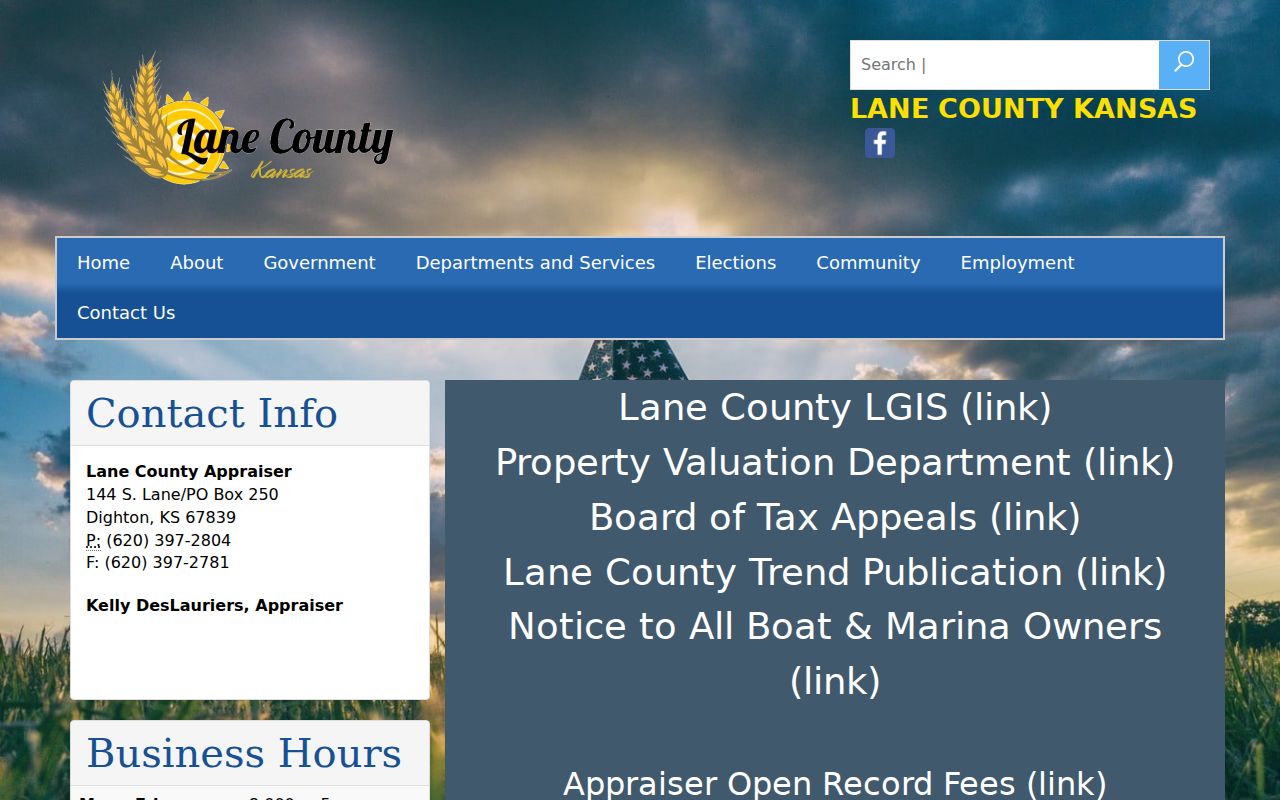
It links the GIS, state valuation guidance, appeal forms, and the 2026 county trend publication.
Kansas Rates Shape Lane County Assessed Value
Kansas starts most classes with a fair-market appraisal. A constitutional assessment rate then cuts that figure down to the taxable portion. Residential property carries 11.5 percent. Commercial and industrial uses pay 25 percent, vacant lots 12 percent, and agricultural land 30 percent of economic-use value. The Kansas Department of Revenue value explanation separates the terms and shows where each fits the formula. Agricultural use value is different in kind. It reflects economic use, not a residential-style sale estimate.
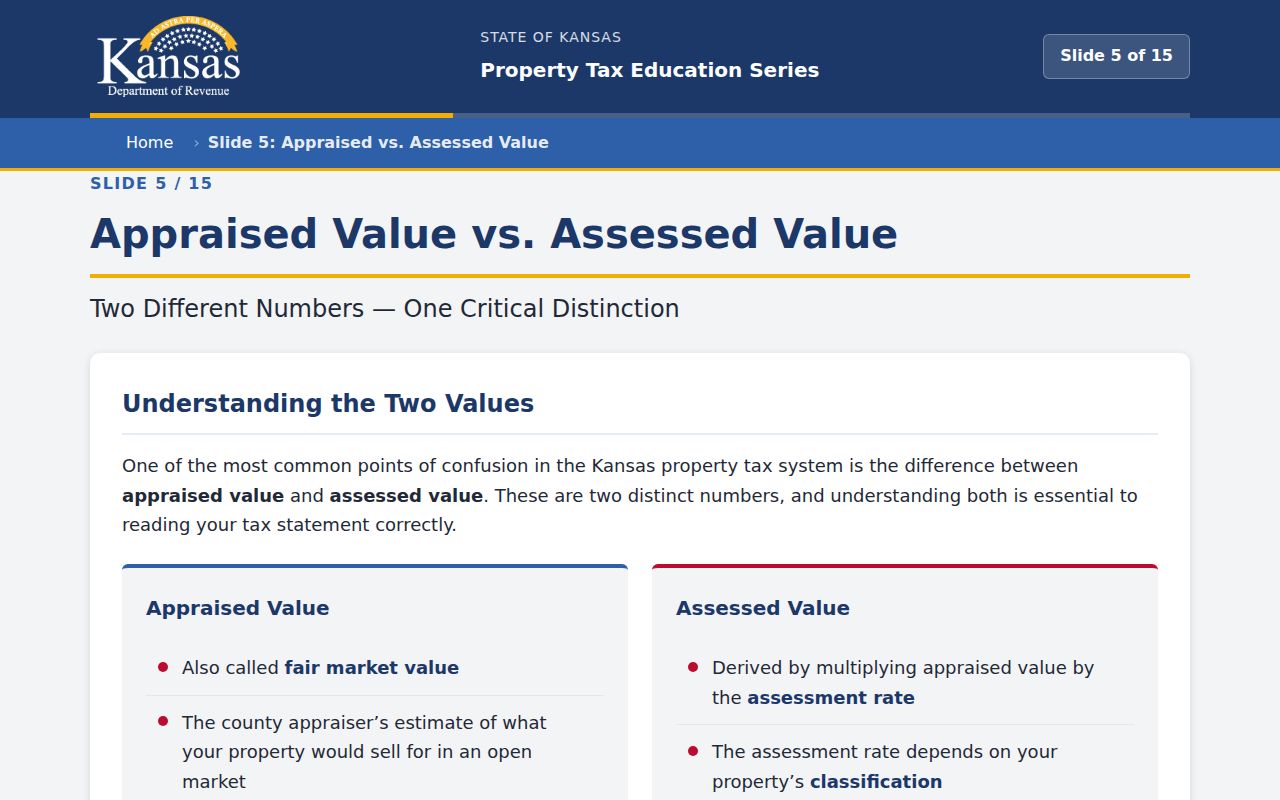
The chart makes the gap plain. An appraised amount is not the tax a parcel owes. Note: Levies and the assessed-value step still stand between the appraised value and the final statement.
Look Up a Lane County Tax Statement
The state payment page handles payment on an existing statement. It does not replace the Lane County property tax search or a Treasurer status check.
- Find the parcel in LGIS and save its full ID, legal description, owner label, and tax year.
- Contact the Lane County Treasurer at 620-397-2802 for the statement, balance, payment, or delinquency status.
- Use the state payment service with the county statement in hand, and select Lane County.
- Keep the payment confirmation separate from the parcel appraisal and recorded-title files.
- Assessed value
- The class-adjusted value used for tax.
- Mill levy
- A rate applied to assessed value.
- Exemption
- Legal treatment that changes taxable status.
- Tax lien
- A public claim tied to unpaid tax and its legal process.
Lane County Property Classes Change the Math
Dighton results show the contrast. The VFW Post 6438 parcel at 211 S Main carries a class of Exempt, while S&T Telephone Coop Assn at 130 S Main shows Commercial & Industrial. Other Main Street rows read Residential. These are tax classifications, nothing more. They say nothing about occupancy, title quality, or present business activity. LGIS also offers Agricultural Use, Farm Homesite, Utility, Vacant, Not for Profit, and other choices, so ask the Appraiser which record supports a class before contesting it.
Lane County Treasurer Holds the Bill Status
The Treasurer sits at 144 S. Lane, PO Box 290, in Dighton, open weekdays from 8:00 a.m. to 5:00 p.m. Statements, payments, delinquencies, and tax-sale questions all land here. The Kansas Property Tax Payment portal accepts major cards and e-check. It cannot combine multiple counties in one transaction. It also requires an existing statement. It is a payment route, not an owner search. Note: A payment receipt does not establish whether a later deed, order, or redemption instrument was recorded.
Lane County Delinquency Needs a Current Check
The county publishes no online tax-sale list. K.S.A. 79-2302 directs the Treasurer to prepare the list between July 1 and July 10, with notice for a sale on or after the first Tuesday in September following publication. Ask the office for specifics. Unpaid years, amount, interest and fees, notice status, sale date, and redemption facts all matter. Then check the Register of Deeds for a later tax-related deed. A debt may be cured before sale. An old list, in other words, is not present proof.
The 2026 Lane County Trend Publication
The Appraiser page links a 2026 Lane County Trend Publication. Read the document itself before quoting a trend. Quote its percentages from the source, not secondhand. The official Kansas ratio-study index compares appraisals and sales at the county or class level. That broad measure does not price one parcel.
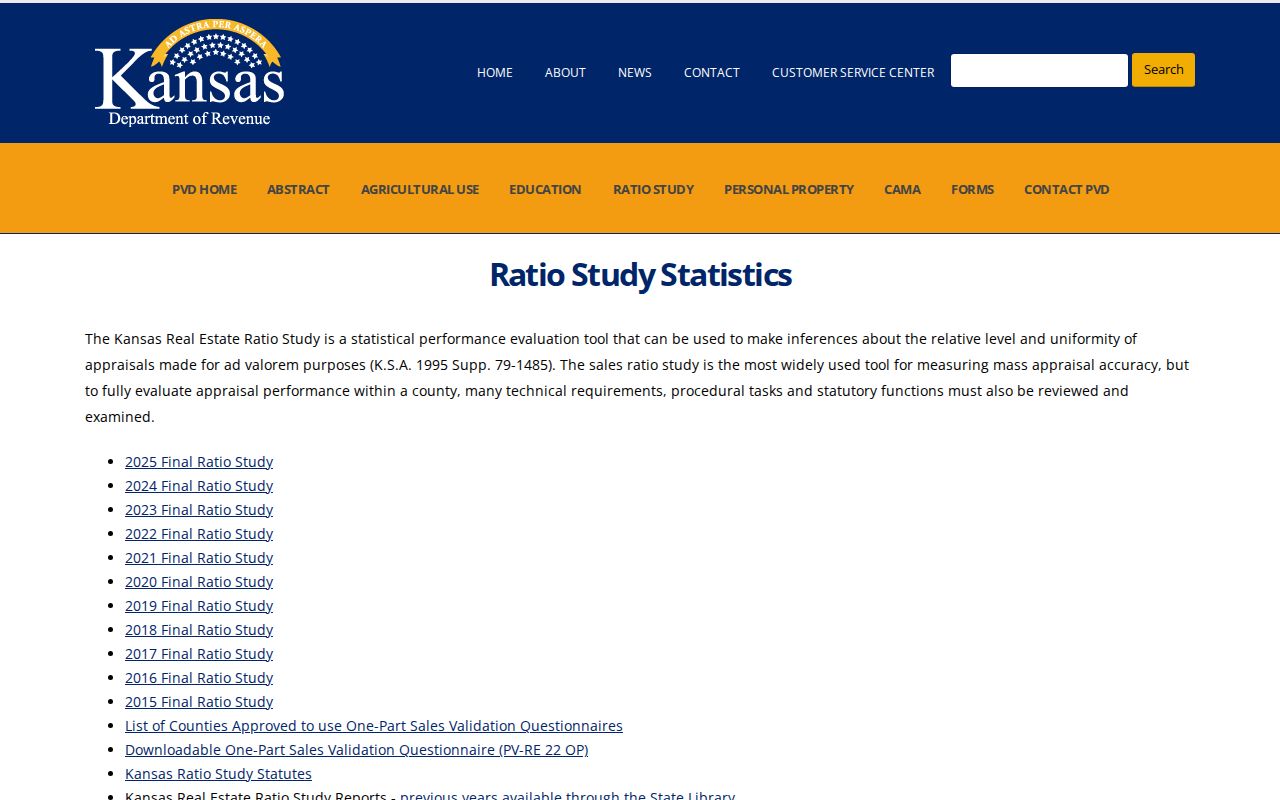
Use the reports as context. Keep parcel conclusions tied to county evidence. One Main Street search returned appraised amounts from $24,020 to $101,960. The results spanned residential, commercial, and exempt records. That spread is not a trend. The parcels differ in class, lot count, acreage, and improvements. A class-level study also says nothing about one parcel's sale history.
A fair comparison holds tax year and class constant. It then weighs parcel characteristics and the county's appraisal basis. A documented sale can add context. A single difference does not prove an assessment wrong, though. For a card not online, the Appraiser page lists $1 for a property record card. It also lists $15 for a rural map book. Confirm current charges and request an existing parcel record rather than a new custom report.
Appeal a Lane County Assessment on Time
The Lane County Appraiser sits at 144 S. Lane, PO Box 250, Dighton, Kansas 67839, reachable at 620-397-2804, fax 620-397-2781, weekdays 8:00 a.m. to 5:00 p.m. Call that office first about parcel cards, classifications, values, and the informal meeting each spring.
The Treasurer shares the courthouse complex but plays a different role. Payment-under-protest paperwork goes there, not to the Appraiser. Keep copies. Ask how the received date is stamped, because a valuation chat with the Appraiser never preserves a Treasurer filing deadline on its own.
Sale disputes demand careful matching. Confirm the deed price, transfer date, property class, and parcel identity all describe the same land. The county publishes no verified sale date, price, improvement split, exemption detail, or value-history series on its detail card, so never fill those fields by guesswork.
Owner names lag too. The parcel roll can still list an owner from before a recent recorded deed. The portal advertises Thursday updates, yet it fixes no closing-to-roll delay, so ask the Appraiser when the owner and valuation record will refresh. Rely on the newest deed for transfer timing and the tax record for assessment administration.
A tax-sale inquiry turns on three separate facts. The Treasurer states the unpaid year and current status. The statutory list or notice shows what was published at a given moment. A later recorder instrument reveals whether a conveyance was filed. None of them alone tells the whole sequence.
Ask whether payment, interest, fees, sale scheduling, or redemption shifted after the publication date. Kansas law describes the list and sale framework, but the county site posts no current Lane list, publication outlet, sale date, or parcel file. An older notice cannot fill those gaps.
Separate a tax question from a value question. The Treasurer explains the statement and payment history. The Appraiser explains class and valuation. The Board of Tax Appeals supplies state appeal forms. The Register of Deeds never calculates the bill, though its instruments help identify the correct owner and land.
The spring route starts with the Notice of Value. Contact the Lane County Appraiser within 30 days of its mailing date to request an equalization appeal and informal meeting. The county publishes no separate local hearing calendar.
Payment under protest works differently. Kansas guidance places the written filing with the Treasurer on or before December 20, or with payment when paying after that date. Save the notice, parcel ID, legal description, class, comparable evidence, photos, hearing result, and proof of timely filing.
The Kansas Board of Tax Appeals forms index lists equalization and payment-under-protest resources. Its official page appears here:
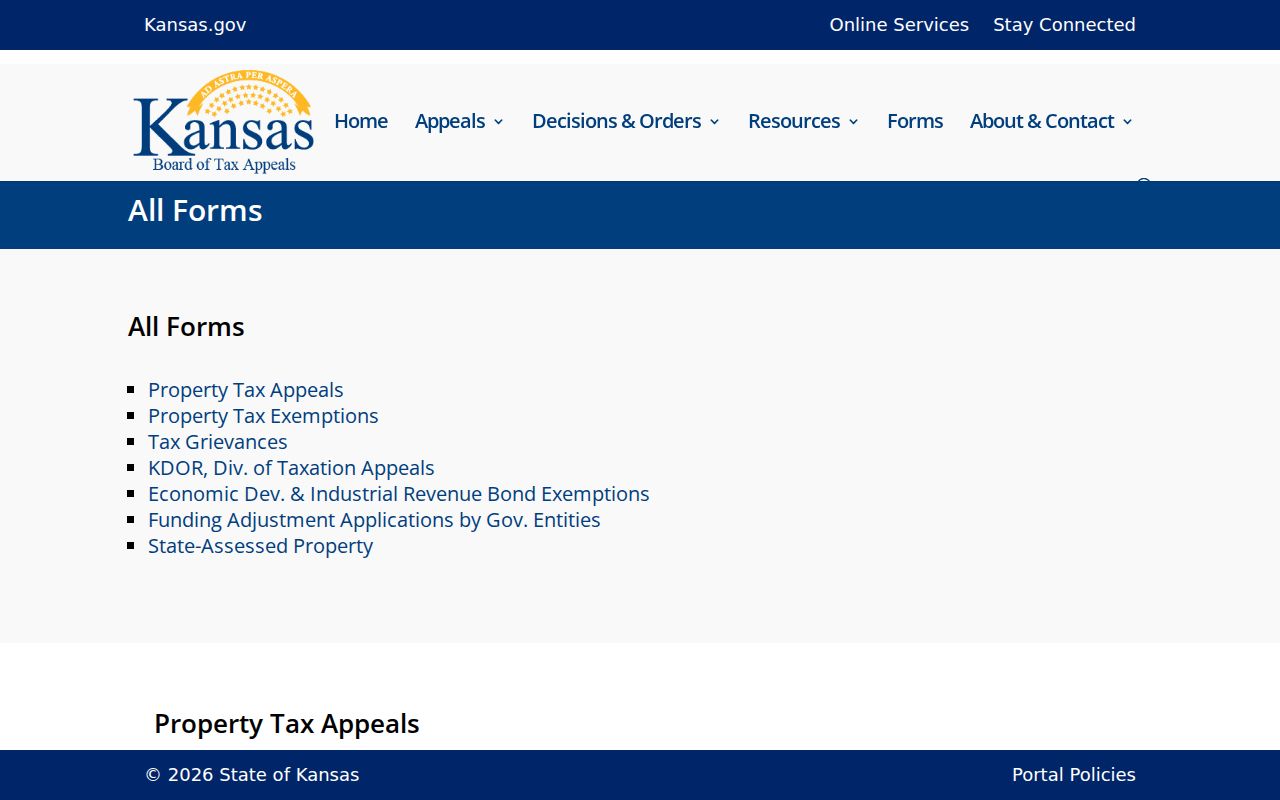
After the hearing, the county Appraiser supplies the equalization form alongside the results letter.
The three routes serve different purposes. An equalization appeal disputes valuation or classification. A payment-under-protest case preserves a challenge tied to payment. A tax grievance targets specified clerical errors. Ask the county which record and deadline apply before filing anything.
Kansas sets the annual calendar by statute: budget certification by August 25 and tax-roll certification by November 1. The abstract follows by November 15, statements by December 15, and full or first-half payment by December 20. Confirm the current dates against state guidance.
Evidence should stay parcel-specific. Photographs, measurements, condition records, and comparable data matter. Classification support and the actual Notice of Value matter too. A neighboring parcel's appraised amount can help. But compare land, class, improvements, and valuation year first.
Appeal window. The equalization request is due within 30 days of the mailed Notice of Value. Payment under protest follows its separate December 20 rule.